







There’s a certain kind of city that doesn’t just sit on a map—it breathes. It takes in the world and sends something new back out. The old ports know this best.
“Great port towns of the world have always been crossroads—places where culture collides, then recombines into something entirely new.”
From Genoa to Bordeaux, from London to New York City, stretching west to Los Angeles and across the Pacific to Shanghai—these are not just trading hubs. They are places where ideas arrive disguised as goods. Where taste evolves. Where identity is negotiated.
“Whether on a river or an ocean, these cities are where the world learns how to speak to itself.”
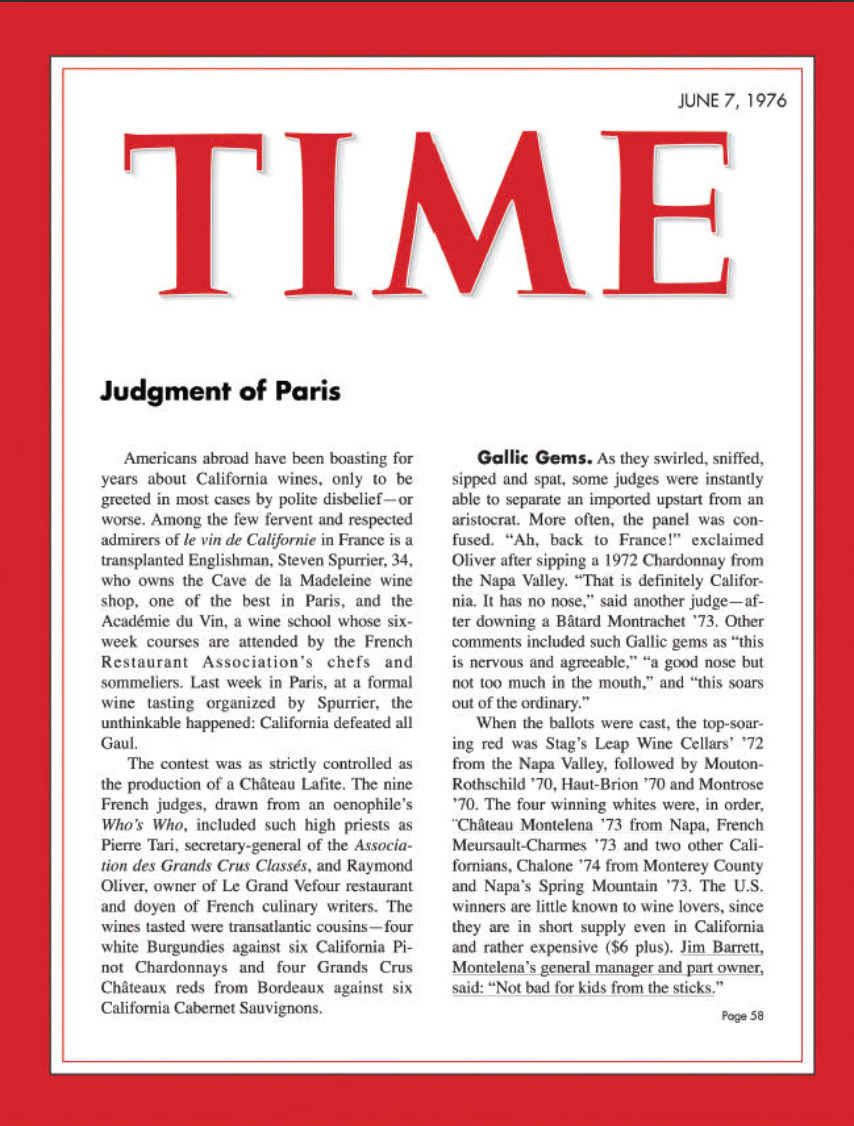
And in 1976, in a quiet room in Paris, something shifted.
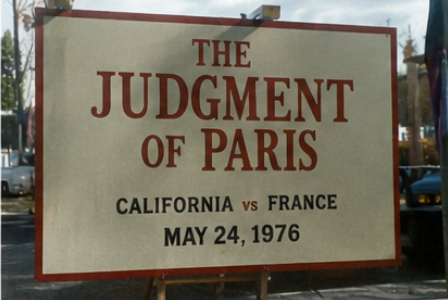
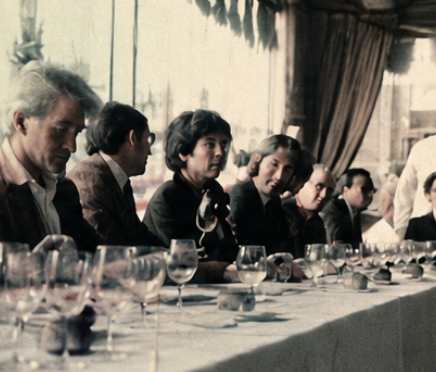
The Judgment of Paris wasn’t supposed to be a revolution. Organized by Steven Spurrier, it was meant as a bicentennial nod to a young nation—an experiment, almost polite in its ambition.
But the result was anything but.
“In a single afternoon, America didn’t just compete—it declared itself.”
California wines—unknown, underestimated—outperformed the most revered bottles of France. Judges stunned. Palates confused. History rewritten.
And the timing mattered.
“The tasting took place during America’s bicentennial—a moment meant to look backward. Instead, it forced the world to look forward.”
Two hundred years after independence, the United States didn’t just assert political sovereignty. It proved cultural authorship. It could create. It could be refined. It could belong.
That’s what made the moment electric.
“This was America finding its voice—not by imitation, but by expression.”
And that’s where New Orleans enters the story.
Because New Orleans has always understood this language.
A port city shaped by the Mississippi River and the Gulf beyond, it has spent centuries absorbing influence—French, Spanish, Caribbean, African—and transforming it into something unmistakably its own.
“New Orleans doesn’t borrow culture. It metabolizes it.”
Music, food, ritual, architecture—each one a product of exchange, not isolation. So to revisit the Judgment of Paris here, at International House Hotel, is not a coincidence. It’s a continuation.
“The Judgment of Paris belongs in New Orleans because this city understands that excellence is born where worlds meet.”
Wine, after all, is not just agriculture. It is geography, climate, migration, and risk. It is coastal wind, river soil, and human instinct.
“In this instance, the art is the wine—and the canvas is the coast.”
From Bordeaux’s estuaries to California’s valleys, from old world to new, the same forces shape greatness: proximity, exchange, exposure. And now, fifty years later, we return to that moment—not as a reenactment, but as a recognition.
“We are honoring not just a tasting, but a turning point—when a young country proved it could stand among the old, and when the world was reminded that innovation often arrives from the margins.”
Because every port city knows:
“What arrives by water never leaves unchanged.”
And neither do we.